



Peer Mentoring at New York College: A Journey of Growth, Connection, and Belonging
New York College Campus | Peer Mentoring Programme
By facilitator Christina Tsaliki
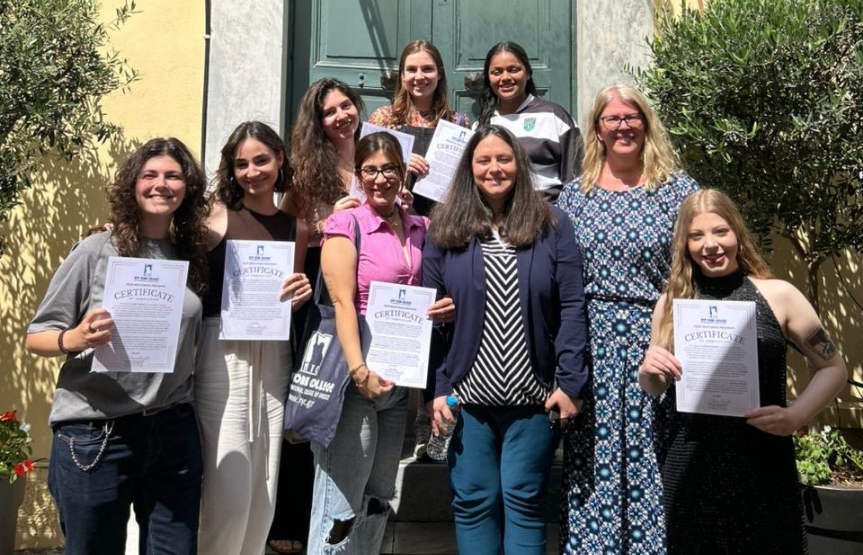
By mentors: Spyros Alexis, Panagiotis Dritsas, Aggeliki Zagari, Veronika Katyrynchuk, Tarandeep Kaur, Vaggelis Marmaridis, Lia Synodaki, Maria Tassopoulou
Educator's Reflection
New York College Athens launched its Peer Mentoring Programme in the spring semester of the academic year 2023-2024, bringing together students in a structured yet deeply human exchange of experience and support. At the heart of the initiative were the mentors-students who volunteered their time, shared their stories, and offered guidance to peers navigating the challenges of college life.
Under the coordination of the programme's trainer, mentors and mentees met regularly to build connections that went far beyond academic advice. The programme proved that some of the most meaningful learning happens not in lecture halls, but in honest conversations between people who are willing to show up for one another.
At New York College, peer mentoring is not a checkbox on a student timetable. For those who have lived it, as mentors, as mentees, or as facilitators, it becomes something harder to define and far more lasting. It becomes, as one student put it, "a learning opportunity and finding myself."
The Peer Mentoring Programme pairs experienced students with newcomers within the same campus community. Grounded in the principles of collaboration, empathy, and shared experience, it operates on a deceptively simple premise: that students who have already navigated academic and personal challenges are uniquely placed to support those just beginning the journey. What emerges, however, is rarely simple at all.
Learning by Doing: The Mentor's Perspective
For mentors, the programme often begins in anxiety and ends in confidence. Spyros, a mentor at New York College, describes that arc with striking honesty: he initially signed up half-expecting the sessions to be tense and demanding. What surprised him was how naturally the connection formed once he was in the room with his mentee. I felt completely and utterly fixated on what was being told to me in that moment by my mentee and the only thoughts flooding me were focused on leading the conversation in the right direction. I can confidently say I possess a lot of trust in both my abilities and my skills. The constant support from both our trainer and the group of peer mentors is proof that this isn’t something I am alone in, that even if I am faced with difficulties, there are people around me willing to help
Spyrοs, Mentor
Another mentor, Lia reflects upon the experience: The benefits of peer mentoring are numerous. Mentees gain guidance, build their confidence, and develop a deeper understanding of their own goals. Mentors, on the other hand, strengthen their communication skills and grow in empathy.
On campus specifically, peer mentoring is a valuable tool for integration and adjustment. Students tend to feel more at ease when they have someone beside them who has been through similar experiences and is willing to share what they know, someone who speaks their language, not just academically, but personally.
Lia, New York College
A third mentor, Tara reflects on the unexpected depth of the experience, emphasising that the training sessions themselves, the reflective exercises, the group dynamics, the space to sit with uncertainty, were as formative as the mentoring sessions themselves: During this process not only did I spend valuable time finding myself through self-reflecting activities we did during the training sessions, but I also learned new ways of expressing and communicating my thoughts. In addition, I would look forward to our weekly meetings with our team, as those hours felt enjoyable. I always felt grateful for being able to provide a trusting environment for the mentees to be willing to talk about them.
This programme was not just another contribution for my CV. It was more of a learning opportunity and finding myself. Therefore, I decided to enroll again this year, and as I will every year until I graduate.
Tara, New York College, Athens
Vaggelis also, mentions: Mentoring is a process of guidance and support, in which a more experienced individual helps someone less experienced to grow both personally and professionally. My own experience was particularly collaborative, creative, and built on trust, I felt it genuinely encouraged self-expression and personal development. Through the process, critical thinking is strengthened and horizons are broadened, leading to more open and "out of the box" ways of seeing things.
Reaching the end of this year of training, what I take with me is the growth it gave me and the freedom it offered from my own comfort zone, stepping into the practical, hands-on side of psychology.
Vaggelis, New York College, Athens
Veronika and Angeliki mention: Peer mentoring has truly been a game-changer for me. It boosted my academic confidence, sharpened my skills, and allowed me to make a real difference for my peers. As William James insightfully puts it, “The greatest discovery of my generation is that a human being can alter his life by altering his attitudes.”
Veronika, New York College, Athens
The feeling of gratitude that you get when the mentee says that something you told helped them. This program helped me to understand people, as I learned to hear and look at the overall image and not just the "front page" of someone or something. Things differ from the stage of "imagination" to the stage of "action."
Angeliki, New York College, Athens
Finally, Μaria and Panagiotis reflect: I joined the peer mentoring programme because I wanted to see what it truly means to support someone through a relationship of trust, not just in theory. At first, I had my hesitations: would I be able to respond adequately? Would I find the "right" way to help? Working through this module eased those doubts. I imagined it as a process of learning through experience and group reflection.
I did not have my own mentee, but through the conversations and the lived experiences of others, through the way we worked as a group, I understood a great deal about what it means to listen and to stand by someone. It helped me realise that the most important thing is not to offer solutions, but to be present and listen without judgement. That realisation changed the way I communicate in everyday life too. If I could go back, I would do it all again, because it brought me closer to the clinician I want to become.
Maria, New York College, Athens
I firmly believe that this program is a great initiative that can strengthen the New York College’s community and will be a valuable addition to the college’s existing support services. In overall, I think that it represents all the positive values of a healthy community and reminds us that we can effectively be there and support our peers. Help should always be there for those who need it.
Panagiotis, New York College, Athens
Being Heard: The Mentee's Experience
The impact of the programme on mentees is equally profound, and in some cases, transformative. Across the voices gathered through the programme's research in the past years, several themes emerge with striking consistency: the relief of feeling truly listened to, the value of a non-judgemental space, and the unexpected depth of growth the relationship enabled.
For K., the distinction between hearing and listening became the heart of the experience: She listened to me. She listened to me a lot, she never interrupted me... It's okay for the other person to listen to you, but they must listen to you. I hear is one thing, and I listen is another, it is completely different. I listen to you with all my attention; my eyes are on you and nothing else.
K, Mentee
For P., the journey was one of opening up, discovering, through the relationship, aspects of herself she had not previously been able to access alone: Because we had this connection, I also perceived things in myself that I couldn't understand on my own for some reason. While with the guidance I understood them, it was a big change. I worked a lot on my insecurities, set some priorities, set some boundaries in my relationships, something I never did.
P, Mentee
I.’s experience as a Spring entry student, captures the dual power of the peer relationship: the mentor’s shared history as a fellow student turned what could have been distant advice into genuine solidarity.For students who join mid-year or feel on the margins of campus life, this matters enormously: When I joined, I was already six months behind, many students had already formed their own small groups and friendships. I felt like an outsider. But since my mentor had gone through the same thing, she really helped me feel more comfortable and view the situation differently. That was the most important part for me.
I., Mentee
A Space That Feels Like More Than Mentoring
One of the most thought-provoking findings from the programme’s research is how consistently mentees describe the experience in terms that echo therapeutic support, while at the same time recognising and respecting the boundaries that distinguish mentoring from therapy. E. summarises it plainly: For me personally, it helped me because it was like a mini psychotherapy, like I would be with a counselling psychologist who I tell my problems and who also gives an opinion, helps me, or opens my eyes.
E., Mentee
K., who also drew a parallel to the boundaries of a therapeutic relationship, described the limits as something the mentor communicated with warmth and skill: We're not friends, but she showed it to me in a good way, she didn't impose it. It will be like with my psychotherapist: I can't create friendships, but I can have the formalities, and I'll be very happy when I see her.
K, Mentee
Belonging, Confidence, and What Comes Next
Beyond the individual sessions, the Peer Mentoring Programme shapes something collective: a campus culture in which students feel seen, supported, and connected to the institution that holds them. As K. puts it, New York College is doing something rare: We are very lucky that we started it, and you are one of the first colleges I have heard of that says: we are here to help students.
K, Mentee
And the impact lingers. For E, the mentoring relationship did not create new strengths, it reawakened existing ones that had been dimmed during a difficult transitional period: I already had them, I had just given them up a bit because I was in this strange transitional period. The mentor reminded me that I have all of this.
E., Mentee
All mentees surveyed expressed a wish to become mentors themselves one day, a testament not only to what they received, but to what they now feel capable of giving.
Peer mentoring, at its best, is not about expertise. It is about presence, the willingness to sit with another person, to listen without fixing, and to trust that being heard is already a form of help. At New York College, that belief is being put into practice, one session at a time.
Acknowledgments
A heartfelt thank you to all the mentors who gave their time, their patience, and their honesty and to all the mentees who showed up with courage and openness. This programme exists because of you, and what you built together this year is something worth carrying forward.